Novadip’s revolutionary recipe for healing broken bones
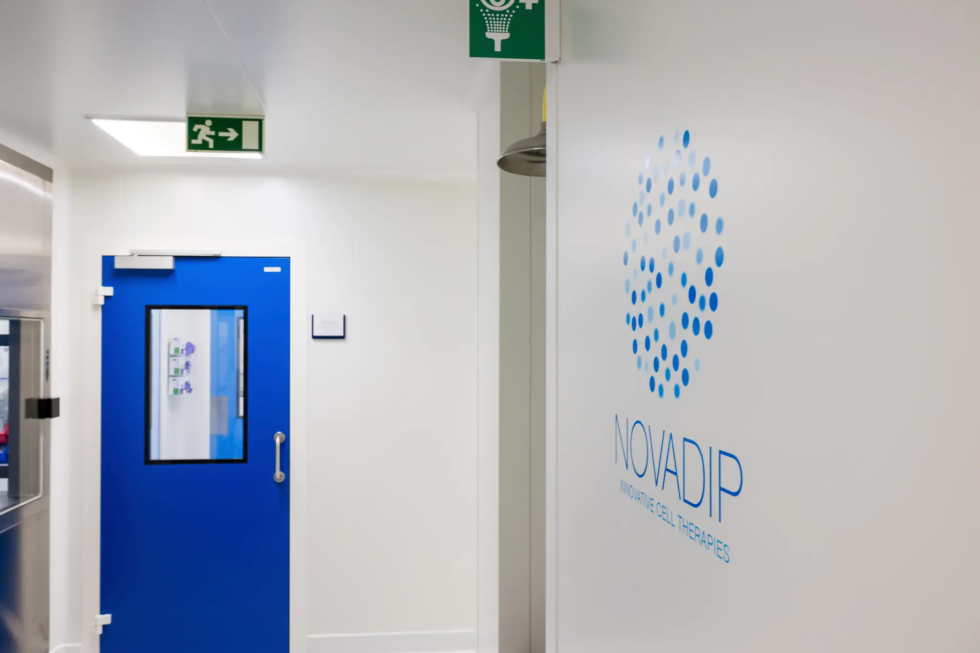
Novadip develops regenerative therapies for critical bone defects, utilizing adipose-derived stem cells to accelerate healing in conditions like bone non-union and spinal fusion.
- Founded: 2013
- FTEs (2025): 45 in Belgium
- Total fundraising amount: €116 million in equity and non-diluting funding
- GMP certified
- Designations: FDA: Rare Paediatric Designation / Fast track and Regenerative Medicine Advanced Therapy Designation, 2 Investigational New Drug, EMA: Orphan Drug Designation
Closing the gaps in bone repair
Breaking a bone is a traumatic experience. The surgery that follows can be demanding, with risks of blood loss, infection and long recovery periods. This is a serious challenge for healthy adults, and an even heavier burden for children with severe bone diseases. Bone defects continue to represent a significant medical issue, with 178 million new fractures every year globally.
After treating many young patients at Cliniques Universitaires de Saint-Luc in Brussels, Belgium, Denis Dufrane, MD-PhD and CEO of Novadip Biosciences, felt compelled to find a better solution.
Currently, the gold standard for treating large bone defects is autologous bone grafting, where bone is taken from one part of the body and fused to another. The procedure is highly invasive and only used as a last resort, usually before amputation.
“We can prevent amputations in patients when bone grafts have less than a 50% chance of success,” explains Dufrane. “Additionally, it is a one-shot type of operation; if it fails, we can’t go back and redo it.”
Novadip has developed a more adaptable approach, taking stem cells from a patient’s fat tissue and combining them with a mix of bioactive factors in a three-dimensional matrix. This technique, based on the company’s 3M³ platform, enables bones to heal naturally, faster, and stronger, while remaining minimally invasive.
We can prevent amputations in patients when bone grafts have less than a 50% chance of success.
Start with the hardest cases
Novadip’s story began with Dufrane’s clinical experience at Saint-Luc, where he treated children recovering from bone tumour resections. Their situations inspired him to search for safer and more effective alternatives.
While many developers of advanced therapies avoid paediatric cases because of their complexity, Dufrane chose to begin there. “While working at Saint-Luc, my mentor always said: if you can treat the most difficult cases, you can treat everything,” he recalls. “That’s where we started.”
From the outset, the team combined laboratory research with a strong clinical perspective, ensuring that their approach could be applied safely in real surgical conditions.Their efforts led to the development of a first-in-class therapy, NVD003, one of the first regenerative treatments capable of rebuilding bone tissue in children who had no other therapeutic options.
That same philosophy of tackling the most complex challenges first guided the company’s evolution. As Novadip grew, it brought together people with complementary expertise and a shared sense of purpose. “In my position, you need to lose your ego, or it can hurt the company,” Dufrane says. “I need experts who challenge me and tell me when I’m wrong. Now I think we have a strong international team to lead our next phase of clinical and business development.”
While working at Saint-Luc, my mentor always said: if you can treat the most difficult cases, you can treat everything.
On a strong growth trajectory
Novadip’s progress reflects both scientific discipline and long-term commitment. Its first product, NVD003, is an autologous cell therapy for patients with no alternative treatment options. The second, NVDX3, is an allogeneic therapy designed as a first-line treatment for patients whose fractures no longer heal, particularly older adults. Clinical results for NVD003 so far show an 89% success rate across adult and paediatric patients.
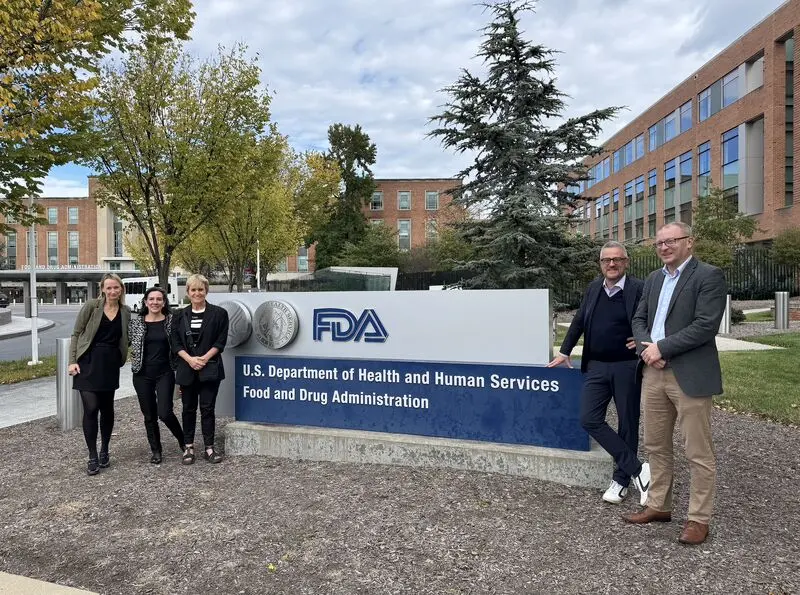
Together, these developments address a global potential market of around $13.5 billion in bone-regeneration therapies. Both products have earned the backing of international authorities. In June 2025, the FDA has granted the Regenerative Medicine Advanced Therapy (RMAT) designation to NVD003 for the treatment of congenital pseudarthosis of the tibia (CPT), a rare paediatric bone condition. In 2023, the European Investment Bank (EIB) supported the company’s development and market preparation with €18 million venture debt agreement. Novadip expects to reach both the European and American markets by 2027, opening the way into Japan soon after. The company is also in the process of raising funds in a Series C funding round to advance its lead products to the market.
Innovation, the Walloon way
Novadip’s story is closely tied to where it began. The company plans to stay in Mont-Saint-Guibert, where all its development and production take place under FDA-approved manufacturing conditions. Everything happens there, from research to production and export, in a region that has quietly built deep experience in biotechnology.
The perspective is all the more meaningful for Wallonia, as Novadip has every intention of keeping its roots in the region.
“We have exceptional know-how here,” says Dufrane. “It comes from years of experience in biotech research. The people who work with us understand the complexity of what we do. I couldn’t imagine leaving and starting again somewhere else.”
The path of cell and gene therapies in Belgium has not always been smooth. Many companies have faced regulatory, financial, or scientific hurdles along the way. Yet, as Dufrane points out, this accumulated experience has become a strength. “In the last 20 years, Belgium has developed an incredible pool of expertise, in manufacturing, education, biotech technicians, etc. The people who come from ventures that didn’t make it bring valuable knowledge. If you can learn something, it’s always a success.”
Among the institutions that have supported Novadip’s journey, SPW has played an important role in helping the company navigate international regulatory discussions, particularly with the FDA.
Novadip is also involved in 4 collaborative R&D projects supported by BioWin, exploring areas such as oncology, skin regeneration, exosomes, and digital innovation. These projects cover different levels of collaboration, regional, interregional, and international, showing how the company makes the most of the flexible tools available for innovation in Wallonia. Among them are projects within the ATMP-PIT portfolio focused on advanced therapies.
“Each collaboration takes us a bit further,” says Dufrane. “Some reach across borders, others keep us close to home, but they all remind us how strong the Walloon network really is, and that’s exactly where BioWin makes a difference. Novadip’s story couldn’t have taken shape without this ecosystem, the universities, investors, and public institutions that make it possible for things to move forward.”
To find out more about the company and its work, visit www.novadip.com